4 Nov 2010

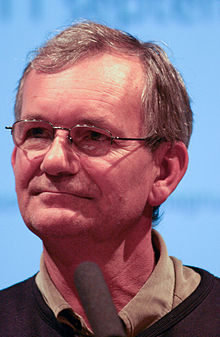
Unit 305 - Photographer, Martin Parr

Photographer - Martin Parr


Not finished yet!!


Martin Parr was born in 1952 in Epsom, Surrey. Inspired by his grandfather who was a keen amateur photographer, he studied photography at Manchester Polytechnic.

Martin is now a recognised documentary photographer and photojournalist, known for his critical look at modern society.

Initially working in black and white, he worked around the north of England. Examples of this time being Bad Weather (1982) and A Fair Day (1984). Later he started using colour as in his work 'Last Resort: Photographs of New Brighton (1986).

Parr's technique is a very candid, intimate view of how we live. Much of his work shows people as quite primitive and raw, but often adds a touch of humour.

Parr has had almost 50 books published, and featured in around 80 exhibitions worldwide to date.

From - Bad Weather (1982)

From - Bad Weather (1982)

From - Bad Weather (1982)

From - A Fair Day (1984)
From - Last Resort: Photographs of New Brighton (1986)

From - Last Resort: Photographs of New Brighton (1986)

From - Last Resort: Photographs of New Brighton (1986)

From - Last Resort: Photographs of New Brighton (1986)

From - Last Resort: Photographs of New Brighton (1986)


Unit 305 Photographer, Peter Marshall

Peter Marshall - Urban Photographer
Research
As part of my research, I looked at the work of Peter Marshall (Peter Marshall). One of his images showed the corner of Fish Street and Robinson Row. It was taken around 1975. I found the same location and my image is below the original. The subject has certainly changed, but is more interesting is the difference in the lighting. In the original, there are no hard shadows and the low light level gives the picture a sad, run down feel. The modern picture was taken in bright sun, giving more shadow and bright areas. Even in monotone, it is hard to reproduce the same sad feel to the scene. This is something to bear in mind when looking at a subject.

Fish Street c. 1975
Fish Street 2010

2 Nov 2010

Unit 305 Theme 1 - Assignment Planning

Assignment Planning: Social Documentary, Kingston-upon-Hull 2010 
Background
Hull is a very diverse city. Because of its geographical location on the Humber Estuary it grew up as an important fishing port and trading point with Europe. After the Second World War, the area became depressed and sea trade diminished. Much of the city fell in to decline. By the mid seventies, the inner city areas started to be cleared and large estates grew up on the outskirts. The city was rejuvenated and today there is a great mix of old and new. Hull has a very unique feel to it, and there are many things that can be photographed that could only be Hull. I want to capture this uniqueness in my images, while still producing good urban landscapes.
Prior Planning
I have thought about how I should plan the images for this assignment. Because of the diversity of the city, I would like to show a mix of the old and modern. Then some scenes are better at night, showing off the vibrant city life, so I shall think about where this can be best used. Although not exclusively, I want to have people in some images, like the samples I highlighted from Iain Hutchinson in a previous blog. Finally, I will consider some indoor scenes. I hope that these different approaches will help to show the use of various lighting conditions and how different urban landscape images can be. Weather can play a big part in the selection of shots too. Indoor and night time shots can be more controlled as the light is artificial and more consistent, but requires careful exposure settings to get it right. At this time of year (November), there is only a short period in the day when daylight is effective. Without artificial lighting available, early mornings and late afternoons are very grey and produce little contrast and tone.


I have spent a couple of weekends walking around the city and looking for suitable subjects. Some subjects cannot be calculated. I hope to find some candid, unusual shots, so to achieve this I ensure I have my camera with me as much as possible. I have listed all the possible areas of interest that I have seen and inspired me to think of how I can use some of them for my images.


People
Phone box (unique - white)
'Big Willie' poster (Hull KR publicity)
Fireworks
KC Stadium
Princes Avenue (pubs and restaurants)
Buses/Bus stop
Cinema
Bridges
The Deep
Pubs
Church
Marina
Shops and Shopping Centres
Streets
Industry
Wind Turbine
Light ship
Markets
Theatre
Airfix building (derelict and graffiti)
Parks (Pearson Park and East Park)
Municipal Buildings


This weekend is Bonfire Night and there is a display in the centre of the city. This should give me a real opportunity to take some night time images, and at the same time capture some interesting 'people' images. I intend to go to the KC Stadium, where the local football team plays, and see if I can get some interesting crowd shots.


Generally, though I shall continue to walk around the various areas of Hull and keep my camera with me, looking for suitable subjects.
Choice of Equipment
For the assignment, I have chosen to use my Nikon D3000 DSLR camera body, fitted with a Nikon 18 -105mm telephoto zoom lens.

The camera has a good resolution and because it is a single lens reflex it makes manual focussing easy. The memory storage cards are capable of capturing several hundred images at a time.

The lens is quite versatile, because it has a good focal length range but is not too bulky. I prefer the flexibility of this lens over using several fixed focal length lenses, reducing the need to keep changing lenses, which also helps to keep the sensor clean.

Full detailed specifications can be found on the Nikon website;

Nikon D3000 DSLR
  • Type: Digital single-lens reflex
  • Sensor: 23.6 mm × 15.8 mm Nikon DX format RGB CCD sensor, 1.5 × FOV crop
  • Maximum resolution: 3,872 × 2,592 (10.2 effective megapixels)
  • Lens: Interchangeable, Nikon F-mount
  • Flash: Built in Pop-up, Guide number 13m at ISO 100, Standard ISO hotshoe, Compatible with the Nikon Creative Lighting System
  • Shutter:  Electronically-controlled vertical-travel focal-plane shutter
  • Shutter speed range:  30 s to 1/4000 s in 1/2 or 1/3 stops and Bulb, 1/200 s X-sync
  • Exposure metering:  TTL 3D Color Matrix Metering II metering with a 420 pixel RGB sensor
  • Exposure modes:  Auto modes (auto, auto [flash off]), Guide Mode, Advanced Scene Modes (Portrait, Landscape, Sports, Close-up, Night Portrait), programmed auto with flexible program (P), shutter-priority auto (S), aperture-priority auto (A), manual (M), (Q) quiet mode. 
  • Metering modes: 3D Color Matrix Metering II, Center-weighted and Spot
  • Focus areas: 11-area AF system, Multi-CAM 1000 AF Sensor Module
  • Focus modes: Instant single-servo (AF-S); continuous-servo (AF-C); auto AF-S/AF-C selection (AF-A); manual (M)
  • Continuous shooting: 3 fps
  • Viewfinder: Optical 0.80x, 95% Pentamirror
  • ASA/ISO range: 100–1600 in 1/3 EV steps, up to 3200 as high-boost
  • Flash bracketing: 2 or 3 frames in steps of 1/3, 1/2, 2/3, 1 or 2 EV
  • Custom WB: Auto, Incandescent, Fluorescent, Sunlight, Flash, Cloudy, Shade, Kelvin temperature, Preset
  • Rear LCD monitor: 3.0-inch 320×240 pixel (QVGA) TFT-LCD
  • Storage: Secure Digital, SDHC compatible
  • Battery: Nikon EN-EL9a rechargeable Lithium-Ion battery 
  • Weight: Approx. 485 g (1.07 lb) without battery, memory card or body cap
Nikon 18 - 105 mm DX lens
  • Focal length: 18-105mm
  • Maximum aperture: f/3.5-5.6
  • Minimum aperture: f/22-38
  • Lens construction: 15 elements in 11 groups (with one ED glass element and one aspherical lens element)
  • Picture angle: 76° - 15°20’
  • Closest focusing distance: 0.45 m/1.48 ft. (throughout entire zoom range)
  • Maximum reproduction ratio: 1/5
  • No. of diaphragm blades: 7 (rounded)
  • Filter/attachment size: 67mm
  • Diameter x length (extension from lens mount): Appproximately 76 x 89 mm/2.9 x 3.5 in.
  • Weight: Approximately 420 g/14.8 oz.
I keep a tripod in the car, and also have a wireless remote control to fire the camera when it is attached to the tripod. To protect the lens from dust and scratches, I have fitted it with a clear UltraViolet filter. This not only helps to keep the lens in good condition, it also reduces glare from the sun.

I have 2x 4Gb SD memory cards to use as image storage. I leave one in the camera and keep the other one in my camera bag, cleaned of any images and ready at all times. After shooting some images, I download the images as soon as possible from the camera on to my laptop computer and back them up on an external hard disk drive. Then I will charge the battery, so it is ready to use at any time.

Along with the battery charger and download cable, I keep a cleaning kit in my camera bag. Especially useful is a soft, lint free cloth to keep dust off of the front of the lens.

Lastly I always have a pen and notebook to record details about the captured images.

Apart from the tripod, everything I need is kept together in a camera bag ready to pick up at any time.
Health and Safety
I like to consider what issues I might have when taking pictures on location. Wearing the appropriate clothing and footwear is important. Climbing over waste ground or along beaches, require sturdy, waterproof footwear. Clothing should allow for changes in temperature and allow for rain and wind too. I always keep a waterproof jacket in the car and a warm fleece, hat and gloves. Checking the weather forecast before going on a location shoot can prove very useful too. An umbrella can allow you to shoot in the rain without getting rain drops on the lenses.

You have to think about road safety, especially at night. I always have a reflective jacket in the car. 

You must consider the safety of others too, having a person to help you is extremely useful to act as another pair of eyes when you become distracted. Keeping your equipment all together in a bag helps to reduce the likelihood of something becoming an obstruction and protects the equipment at the same time.

1 Nov 2010

Unit 305 Theme 2 - Assignment Planning

Assignment Planning: Urban Landscape, Hull's Docks 2010
Background
Hull Maritime Museum
Having decided that I would like to use the docks of Hull as my subject for assignment 2, the first thing I did was to start researching their history and development. In Hull, there is a Maritime Museum in the Dock Offices building, so-named as it is the former headquarters of the Hull Dock Company, which operated all docks in Hull until 1893.  The museum contains a wealth of information concerning the building and usage of the docks and I could start to set out the location and present day use of the old docks.


Reference to the Museum can be found via the link below:


The docks started to be developed in 1775 with The Dock, later called the Old Dock. The docks grew with the growth of sea trade and was booming over the next 150 years.  After the Second World War, trade reduced and many of the docks fell derelict. In the mid 1980's, money was available for the re-generation of the docks. Some still being used as originally intended, others have been changed beyond recognition into shopping centres,gardens, housing estates and a marina.


The main docks are;
  • The Old Dock (1778), renamed Queen's Dock (1855), now Queen's Gardens
  • Humber Dock (1809), now part of Hull Marina (1983)
  • Junction Dock (1829), renamed Prince's Dock (1855), now Princes Quay Shopping Centre (1991)
  • Railway Dock (1846), now part of Hull Marina (1984)
  • Victoria Dock (1850), now a housing estate (1980's)
  • Albert Dock (1869), in use - cargo dock
  • William Wright Dock (1880), in use - cargo dock
  • St. Andrew's Dock (1883), partly derelict and partly St. Andrew's Quay Shopping Centre
  • Alexandra Dock (1885), in use cargo dock
  • King George Dock (1914), Ferry port
  • Queen Elizabeth Dock (1969), Container port

The two old maps below show the extent of the docks as they were at their peak. I then compared that with Google Maps to precisely locate the the position of the old docks in their present form.

http://www.riverhumber.com/index.htm
http://en.wikipedia.org/wiki/Port_of_Hull
http://maps.google.co.uk/maps
Prior Planning
From the knowledge gained with the maps, I was able to decide on the best vantage points to best represent the areas covering the old docks. Once I knew the direction I wanted to take the images from, I could decide on the access to the required view point, time of day and sun angle (or no sun).


The total area covered by the old docks is relatively small and compact, so it is fairly easy to go from one point to the next quickly. I also go have someone with good local knowledge of the area who drives me to the locations I have identified, or suggests better view points.
Aerial view - Hull Docks
I intend to capture an image that best represents each dock as it is today. With the limited number of images required by the assignment (10), it will not be possible to show the whole extent of every dock.

Choice of equipment
For the assignment, I have chosen to use my Nikon D3000 DSLR camera body, fitted with a Nikon 18 -105mm telephoto zoom lens.


The camera has a good resolution and because it is a single lens reflex it makes manual focussing easy. The memory storage cards are capable of capturing several hundred images at a time.


The lens is quite versatile, because it has a good focal length range but is not too bulky. I prefer the flexibility of this lens over using several fixed focal length lenses, reducing the need to keep changing lenses, which also helps to keep the sensor clean.


Full detailed specifications can be found on the Nikon website;
http://www.europe-nikon.com/en_GB/product/digital-cameras/slr/consumer/d3000


Nikon D3000 DSLR
  • Type: Digital single-lens reflex
  • Sensor: 23.6 mm × 15.8 mm Nikon DX format RGB CCD sensor, 1.5 × FOV crop
  • Maximum resolution: 3,872 × 2,592 (10.2 effective megapixels)
  • Lens: Interchangeable, Nikon F-mount
  • Flash: Built in Pop-up, Guide number 13m at ISO 100, Standard ISO hotshoe, Compatible with the Nikon Creative Lighting System
  • Shutter:  Electronically-controlled vertical-travel focal-plane shutter
  • Shutter speed range:  30 s to 1/4000 s in 1/2 or 1/3 stops and Bulb, 1/200 s X-sync
  • Exposure metering:  TTL 3D Color Matrix Metering II metering with a 420 pixel RGB sensor
  • Exposure modes:  Auto modes (auto, auto [flash off]), Guide Mode, Advanced Scene Modes (Portrait, Landscape, Sports, Close-up, Night Portrait), programmed auto with flexible program (P), shutter-priority auto (S), aperture-priority auto (A), manual (M), (Q) quiet mode. 
  • Metering modes: 3D Color Matrix Metering II, Center-weighted and Spot
  • Focus areas: 11-area AF system, Multi-CAM 1000 AF Sensor Module
  • Focus modes: Instant single-servo (AF-S); continuous-servo (AF-C); auto AF-S/AF-C selection (AF-A); manual (M)
  • Continuous shooting: 3 fps
  • Viewfinder: Optical 0.80x, 95% Pentamirror
  • ASA/ISO range: 100–1600 in 1/3 EV steps, up to 3200 as high-boost
  • Flash bracketing: 2 or 3 frames in steps of 1/3, 1/2, 2/3, 1 or 2 EV
  • Custom WB: Auto, Incandescent, Fluorescent, Sunlight, Flash, Cloudy, Shade, Kelvin temperature, Preset
  • Rear LCD monitor: 3.0-inch 320×240 pixel (QVGA) TFT-LCD
  • Storage: Secure Digital, SDHC compatible
  • Battery: Nikon EN-EL9a rechargeable Lithium-Ion battery 
  • Weight: Approx. 485 g (1.07 lb) without battery, memory card or body cap

Nikon 18 - 105 mm DX lens
  • Focal length: 18-105mm
  • Maximum aperture: f/3.5-5.6
  • Minimum aperture: f/22-38
  • Lens construction: 15 elements in 11 groups (with one ED glass element and one aspherical lens element)
  • Picture angle: 76° - 15°20’
  • Closest focusing distance: 0.45 m/1.48 ft. (throughout entire zoom range)
  • Maximum reproduction ratio: 1/5
  • No. of diaphragm blades: 7 (rounded)
  • Filter/attachment size: 67mm
  • Diameter x length (extension from lens mount): Appproximately 76 x 89 mm/2.9 x 3.5 in.
  • Weight: Approximately 420 g/14.8 oz.
I keep a tripod in the car, and also have a wireless remote control to fire the camera when it is attached to the tripod. To protect the lens from dust and scratches, I have fitted it with a clear UltraViolet filter. This not only helps to keep the lens in good condition, it also reduces glare from the sun.

I have 2x 4Gb SD memory cards to use as image storage. I leave one in the camera and keep the other one in my camera bag, cleaned of any images and ready at all times. After shooting some images, I download the images as soon as possible from the camera on to my laptop computer and back them up on an external hard disk drive. Then I will charge the battery, so it is ready to use at any time.

Along with the battery charger and download cable, I keep a cleaning kit in my camera bag. Especially useful is a soft, lint free cloth to keep dust off of the front of the lens.


Lastly I always have a pen and notebook to record details about the captured images.


Apart from the tripod, everything I need is kept together in a camera bag ready to pick up at any time.


Health and Safety
I like to consider what issues I might have when taking pictures on location. Wearing the appropriate clothing and footwear is important. Climbing over waste ground or along beaches, require sturdy, waterproof footwear. Clothing should allow for changes in temperature and allow for rain and wind too. I always keep a waterproof jacket in the car and a warm fleece, hat and gloves. Checking the weather forecast before going on a location shoot can prove very useful too. An umbrella can allow you to shoot in the rain without getting rain drops on the lenses.


You have to think about road safety, especially at night. I always have a reflective jacket in the car. 


You must consider the safety of others too, having a person to help you is extremely useful to act as another pair of eyes when you become distracted. Keeping your equipment all together in a bag helps to reduce the likelihood of something becoming an obstruction and protects the equipment at the same time.


29 Oct 2010

Unit 305 - Photographer, William Henry Fox Talbot

William Henry Fox Talbot

William Henry Fox Talbot was born in 1800. He was an inventor and pioneer of photography. He invented the calotype process, which was the basis for most photographic processes of the last 200 years. The process used paper coated with silver iodide to record images.

Apart from inventing early photographic reproduction, he was also acknowledged as a good photographer, recognising the use of photography as an artistic medium.

His early images which would be considered as urban landscapes still stand up today as being technically and artistically superb.

While researching for inspiration, I could not fail to include Fox Talbot as one such source. He recognised very quickly, how to capture texture, lines and patterns, use of framing and composition and the 'rule of thirds' to create atmospheric urban landscapes.


I will hope to use some of the techniques and skills displayed throughout Fox Talbot's early images in my own assignments, for both urban landscapes and social documentary.


For all the modern processing software and sophisticated camera equipment we have available today, Fox Talbot shows us that the secret to producing a good image is to capture a good image to start with.

William Henry Fox Talbot, 1800 - 1877
Cameras used by Fox Talbot between 1835 - 1839
Latticed window in Lacock Abbey, 1835
An image of a latticed window in Lacock Abbey in 1835 by Talbot is a print from the oldest photographic negative in existence.
----------
The Haystack, c.1845
Here, an image of a simple haystack shows how the use of the rule of thirds, lines, patterns and texture, and good lighting enhances the scene.
----------


Nelson's Column Under Construction, c.1843

The composition has been carefully chosen and the rule of thirds adhered to, producing a fabulous historic record of a national treasure.
----------
The Open Door, 1843

Not a subject that would have been immediately obvious so early in photography, Fox Talbot sees how the use of framing, composition and lines, make this a great picture. The open door, leads the viewer in to the window in the background. The broom handle lies in line with the shadow on the door.
----------
Holy Trinity Church, Bishop's Road, Paddington, London, William Henry Fox Talbot, 1845


In contrast to the others images represented here in my blog, this image is quite naive. T composition is very bland, the view to the church is very square on, and there is a lot of wasted space in the foreground. This is certainly more of an historical record than an 'urban landscape'. 
----------
A scene in York, 1845
Nicely framed and lit, with good use of the 'rule of thirds'. The road in the foreground leads the viewer to the focal point of the Minster.
----------
Ships at Low Tide, c. 1844

Lines, patterns, 'rule of thirds', as well as good composition make this a lovely image.
----------
Street in Frankfurt, 1846
The composition is good, as the road leads you around the corner, 'rule of thirds' used to good effect.
----------
The Fruit Sellers, 1842
I like the candidness of this image. Instead of posing his subjects in a typically formal fashion, Fox Talbot has used the casual, fly-on-the-wall view for this scene. Nice use of composition and lighting too.
----------
Lacock Abbey, c. 1840
Lacock Abbey was the house where Fox Talbot lived for much of his life, and the subject for many of his pictures. Here is a nice view of the house, taken from an oblique angle, making good use of the 'rule of thirds'. The angular perspective leads your eye from left to right.


27 Oct 2010

Unit 305 - Photographer, Iain Hutchinson

Photographer - Iain Hutchinson


While looking for some inspiration for Urban photography on the internet, I came across the site of Iain Hutchinson (iainhutchinson.co.uk). There is not much information about him personally, but it seems fairly clear that he is from the Manchester and Salford area of the North West of England.


Like Peter Marshall, Iain likes to work in black and white, but Iain includes more people and movement in his photographs. He captures the general hustle and bustle of life in a raw, true format. The fast film speed or high ISO setting produces a graininess in the images, which adds  to the atmosphere.


Below are some of his images, from which I shall draw inspiration for my assignments.

This image is beautifully framed by the trees and the use of the low natural light to show the lights inside the church is well done. The crucifix stands out as the focal point, as it appears to float above the scene.


The low light is used to good effect again in this image. The car lights giving the image the sense of urgency. The 'rule of thirds' is applied, and the low camera angle gives the viewer a sense of being in the thick of it. I like this image, and I tried something similar in my low light research. As long as there is some object that puts the location in Hull and is recognisable to locals, I might try to include an image, similar to this in my Theme 1 assignment.

A similar technique is used for this image as the previous one. The shot from within the car helps the viewer to feel very much a part of the environment. The theatre is the focal point. Even though the theatre sign is not completely visible, one knows what it is and you want to look at the play that is being shown and want the taxi to move so you can peek inside the foyer.

Framing plays a big part in this image. The archway of the bridge draws the viewer through to the buildings the other side. The image has lines, shapes and patterns. On the negative side, I think there is too much blank space in the lower third of the image. Hands on the steering wheel, or less of it, by raising the camera might have worked better for me.

View points are used to good effect in many of Iain's images. Here he has got a vantage point over looking the scene.It gives the viewer a broader, more voyeur view being taken out of the street. The buses take the viewer off in to the distance. I will look for different or unusual angles to apply to my images.

This picture differs quite a lot from the previous ones. Without the poster picture on the fence, I would see the building going on behind the fence. The fence itself giving lines and pattern to the image. The poster however,suggests that the children are missing and gives a sadness to the picture and the fence symbolises protection which has now been lost. There is a lot of story in this picture.

I like these quirky shots. We don't know what the graffiti means, but it puts us in a specific location that means lots to some people. You look at the writing first but are drawn by the road to the next bridge. Good use of the 'rule of thirds' and lines.


The previous images have not included many people, but the next 7 images get close up. This image portrays movement and energy, particularly in the blurred hands and the slight angle of the camera.

Another candid shot of every day life. The camera was put at a low view point which gives it a feel of people moving around oblivious to things around them. It looks as though through the eyes of a child observer.


I like this image a lot. At first you are drawn to the girl in the centre of the shot, looking to the side, but then notice the girl holding the cup looking straight at the camera. I start to want to know more about her, she has an air of mystery.


Nicely framed by the two children, one is drawn right up to the door of the building to show what is happening in the scene. Again, good use of the 'rule of thirds' and nice exposure, sets the image off.


The lighting in this image singles out the woman wearing the scarf, and the fact that everyone else in the image is walking in the opposite direction. Although in a busy street, she looks like she is unaware of her surroundings. The location is unique to those familiar with it and I would like to emulate this in my own work.


Just a nice, peaceful scene, no hustle and bustle. Good exposure. The viewer is drawn over the heads of the two women sitting in the foreground to the focal point of the bandstand.


More of a dynamic scene, with patterns and lines underlying the street scene. The high view point again takes the viewer away from the scene in a voyeuristic way.


Good use of the 'rule of thirds', lines and patterns. The shutter speed used just captures the movement of people well. I like this image, as it shows a familiar landmark in a casual manner.


I love this picture. I think the temptation would be to come back out and get the whole statue in the image. By keeping close in and a superb camera position looking in to the eyes of the statue, the figure almost comes alive. Great use of framing and 'rule of thirds'.